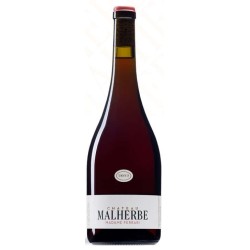
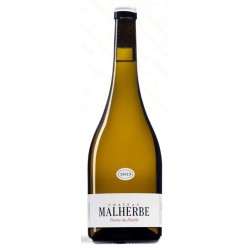
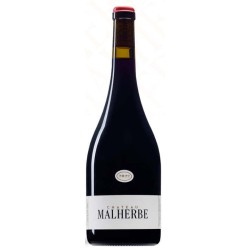
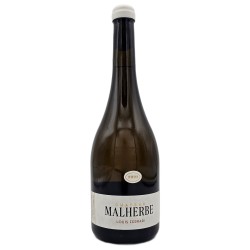
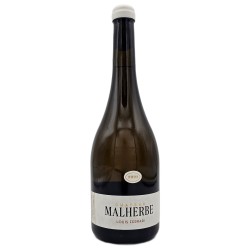
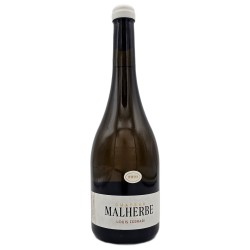
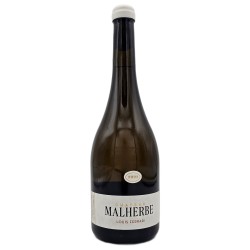
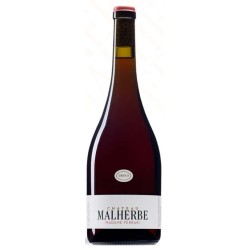
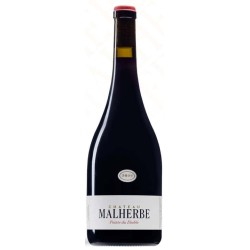
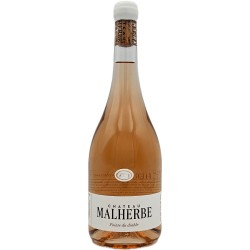
List of products by brand CHÂTEAU MALHERBE
Château Malherbe represents a singular vision of Provençal winemaking: 25 hectares farmed under Demeter-certified biodynamic principles, on the coastal hillsides of Bormes-les-Mimosas, where the Mediterranean moderates the summer heat and lends the Côtes de Provence wines a precision and freshness that sets them apart.
From a Brégançon farm to a dedicated wine estate
The story of Château Malherbe begins in 1935, when Louis Ferrari acquired a working farm belonging to the Fort de Brégançon — the official French presidential retreat on the Var coastline. For nearly three decades the land served mixed agricultural purposes, before the Ferrari family made a decisive commitment to viticulture alone in 1964, converting the entire holding to vine cultivation. That clarity of purpose has defined the estate ever since.
A terroir of exceptional complexity
Spread across the sun-drenched slopes above Bormes-les-Mimosas, the 25 hectares of Château Malherbe encompass a mosaic of soils that is rare even by Provençal standards. Silver schist brings mineral tension and fine-grained tannins; red clay retains moisture and lends body; sandy alluvium drains freely and encourages aromatic delicacy; quartz reflects heat and amplifies ripeness. The coastal exposure — hillsides facing directly onto the Mediterranean — adds a further dimension, with sea breezes tempering the Var heat and preserving natural acidity. The principal varieties cultivated are Rolle, Sémillon, Grenache, Syrah, Mourvèdre and Cinsault, each planted in the parcels best suited to its character.
Biodynamic certification and the Pacalet influence
In 2007, Sébastien Ferrari took over the running of the estate and set about a thorough conversion to organic and then biodynamic farming. Today Château Malherbe holds both Agriculture Biologique certification and the prestigious Demeter biodynamic label — one of the most demanding in European viticulture. A significant milestone came in 2020, when Philippe Pacalet, the celebrated Burgundian winemaker known for his minimalist, terroir-driven approach, joined the Ferrari family as a collaborator. His influence has sharpened the estate's winemaking philosophy, bringing a Burgundian attention to detail and a commitment to expressing each parcel with the greatest possible fidelity.
The wines of Château Malherbe
Across the Côtes de Provence appellation, the estate produces three colours, each reflecting the diversity of the terroir and the precision of biodynamic viticulture:
- Rosé — the backbone of the range, built on Grenache and Cinsault from the sandy and schistous parcels; pale in colour, saline and finely structured, a world away from the generic Provençal style.
- White — led by Rolle and Sémillon, with a coastal freshness and a textural depth that rewards a year or two of cellaring.
- Red — a blend of Grenache, Syrah and Mourvèdre from the clay and schist parcels; warm and aromatic, yet retaining the lift and precision that the Mediterranean exposure and biodynamic farming consistently deliver.
Why we have selected Château Malherbe
At Halles Quercamps, we have followed Château Malherbe closely since Sébastien Ferrari's conversion to biodynamics, and our conviction has only grown with the arrival of Philippe Pacalet. Three reasons stand out. First, the rigour of the Demeter certification: this is not a marketing label but a genuine farming philosophy, visible in the vineyard and audible in the wines. Second, the complexity of the terroir: few estates in Provence can draw on such a varied palette of soils within a single 25-hectare holding, and the wines reflect that diversity with admirable clarity. Third, the consistency of style across all three colours — a rare achievement in a region where rosé so often dominates at the expense of the reds and whites.
We recommend these wines to amateurs who look beyond the obvious in Provence and seek genuine terroir expression. At the table, the rosé is superb with grilled sea bass or a bouillabaisse; the red holds its own alongside a slow-braised lamb with herbs de Provence.
Explore the full range from this estate
Browse all available wines from Château Malherbe — rosé, white and red — in the selection below, and find the bottles best suited to your cellar or your table.