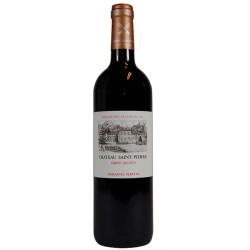
List of products by brand CHATEAU SAINT-PIERRE
Château Saint-Pierre stands among the rare 4th Classified Growths of Saint-Julien to combine documented provenance stretching back to 1693, a successful reunification of scattered parcels, and a genuine environmental commitment now embedded in the management of the vineyard.
A château rooted in the history of Saint-Julien
The story of Château Saint-Pierre begins under the name Serançan, recorded as early as 1693 in the registers of the commune of Saint-Julien-Beychevelle. It is one of the oldest documented estates in the Médoc, predating by more than a century and a half the classification that would consecrate its standing. When the 1855 Classification was drawn up, the château was ranked as a 4th Grand Cru Classé — a position it has held without interruption ever since.
Over the following decades, the estate was gradually broken up and its parcels dispersed among different owners, a fate that befell several classified growths during the turbulent years of the late nineteenth and early twentieth centuries. It was not until 1982 that Henri Martin undertook the patient work of reunification, assembling the scattered plots and restoring the château to something approaching its historical coherence. On his death, the estate passed to his daughter Françoise Triaud and her husband Jean-Louis Triaud, who have continued to develop it with the same sense of long-term responsibility.
Terroir: Günzian gravel over clay-limestone subsoil
The 17 hectares of Château Saint-Pierre sit on graves günziennes — deep Günzian gravel deposits laid down during one of the oldest glacial periods recorded in the Gironde. This ancient gravel, resting on a clay-limestone subsoil, provides the combination of excellent drainage and mineral complexity that defines the finest soils of the Saint-Julien appellation. The gravel warms quickly in the growing season, encouraging full ripening of Cabernet Sauvignon, which accounts for 75% of the vineyard. Merlot (15%) adds roundness and early accessibility, while Cabernet Franc (10%) contributes aromatic lift and structural finesse. Yields are deliberately controlled between 35 and 45 hl/ha, a discipline that underpins the concentration and longevity for which this château is known.
Organic conversion and environmental commitment
Château Saint-Pierre holds HVE certification (High Environmental Value) and is currently in conversion to organic viticulture. This transition reflects a broader shift in the Triaud family's approach to the land — one that prioritises soil health, biodiversity, and the long-term expression of a terroir that has been cultivated for more than three centuries.
The wines of Château Saint-Pierre
The château produces exclusively red wines under the Saint-Julien appellation. The range is built around the grand vin, which expresses the full character of the Günzian gravel terroir:
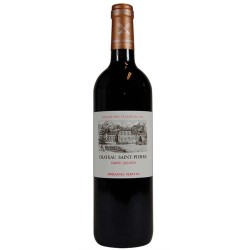
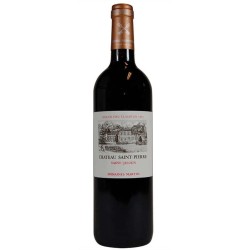
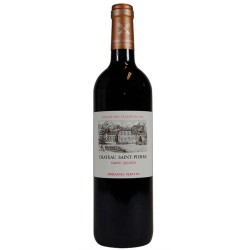
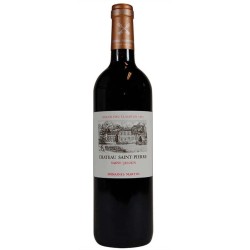
- Château Saint-Pierre Saint-Julien (rouge) — the grand vin; a structured, Cabernet-led red with the classic Saint-Julien profile of dark fruit, cedar, and firm but refined tannins, suited to medium to long cellaring.
Why we have selected Château Saint-Pierre
At Halles Quercamps, we have listed Château Saint-Pierre for three reasons that go beyond its classified status. First, the terroir is genuinely coherent: 17 hectares of Günzian gravel in a single appellation, managed with a clarity of purpose that is not always found among classified growths. Second, the family continuity — from Henri Martin's reunification in 1982 through to the Triaud family today — gives the estate a consistency of vision that shows in the wines. Third, the ongoing conversion to organic viticulture signals a serious, long-term commitment rather than a marketing gesture.
This is a château we recommend to confirmed Bordeaux enthusiasts looking to cellar a classified Saint-Julien with genuine ageing potential. At the table, the grand vin pairs particularly well with rack of lamb, roast grouse, or a well-aged hard cheese such as Comté.
Discover all wines from Château Saint-Pierre
Browse our full selection of Château Saint-Pierre vintages and place your order directly below.