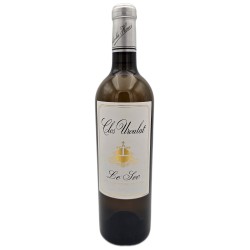
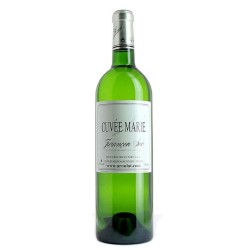
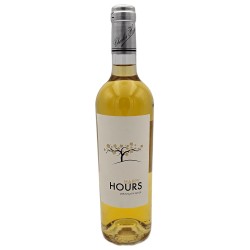
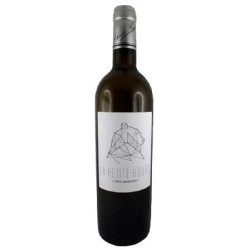
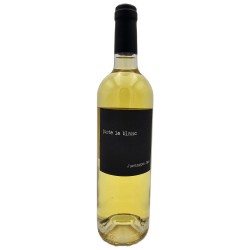
List of products by brand CLOS UROULAT
Since Charles Hours took over Clos Uroulat in 1983, the estate has steadily established itself as one of the most serious and consistent addresses in the Jurançon appellation — sixteen hectares farmed in biodynamy, with two generations now committed to the same exacting standard.
A family estate rooted in the hillsides of Monein
Monein, a viticultural commune on the Pyrenean foothills of the Pyrénées-Atlantiques, sits at the historic heart of the Jurançon appellation. The coteaux here — south and south-west facing, composed of clay-limestone soils — provide the kind of terrain that suits the late-ripening varieties of this corner of the Sud-Ouest: good drainage, meaningful diurnal temperature variation, and a slow, even accumulation of phenolic maturity. Clos Uroulat's 16 hectares occupy precisely these slopes, and the estate has never sought to farm them in any other way than with close attention and restraint.
Charles and Marie Hours: a vigneron's vocation, a family continuity
Charles Hours arrived at Clos Uroulat not through inheritance but through conviction. A scientist by training and a rugby player by passion, he purchased the estate in 1983 and set about learning viticulture from the ground up. That combination of analytical rigour and physical tenacity has shaped the estate's character ever since. In 2005, his daughter Marie joined the enterprise, bringing her own formation and sensibility to bear on a domaine that was already well regarded. Their collaboration has deepened the estate's commitment to quality without altering its fundamental identity: Jurançon blanc, grown slowly, harvested carefully, and vinified with precision.
Biodynamic viticulture and disciplined yields
Clos Uroulat is certified biodynamic — a commitment that goes well beyond the avoidance of synthetic treatments. The estate works to lunar and cosmic calendars, applies biodynamic preparations to reinforce soil life, and maintains yields at 25 hl/ha, a figure that speaks directly to the concentration and definition found in the wines. The grape varieties — Petit Manseng, Gros Manseng, and Petit Courbu — are the indigenous varieties of the Jurançon, each contributing its own register: the aromatic intensity and natural acidity of Petit Manseng, the rounder, more generous character of Gros Manseng, and the freshness that Petit Courbu brings to the blend. Together, and farmed with this level of care, they produce whites of real definition and ageing potential.
The wines of Clos Uroulat
The estate produces exclusively white wines under the Jurançon appellation, in both dry and sweet styles:
- Jurançon Sec — dry whites built on Gros Manseng and Petit Courbu, with a saline, mineral freshness and considerable aromatic complexity
- Jurançon (moelleux) — late-harvest whites dominated by Petit Manseng, with the appellation's characteristic tension between richness and vivid acidity, suited to long cellaring
Why we have selected Clos Uroulat
At Halles Quercamps, we have been listing Clos Uroulat because it represents, in our view, one of the clearest arguments for taking the Jurançon appellation seriously. Three reasons stand out. First, the biodynamic certification is not decorative: the low yields and the vitality of the soils are legible in the wines themselves. Second, the blending of Petit Manseng, Gros Manseng, and Petit Courbu is handled with a precision that few estates in the Sud-Ouest match. Third, the continuity between Charles and Marie Hours has produced an estate that combines experience with freshness of approach. We recommend these wines to enthusiasts who appreciate southern French whites with genuine structure and the ability to develop in bottle. At table, the dry Jurançon is a natural companion to fish in cream sauces or aged Ossau-Iraty; the moelleux is superb alongside foie gras or a ripe blue cheese.
Explore all wines from Clos Uroulat
Browse our full selection of Clos Uroulat Jurançon whites — dry and moelleux — listed below, available to order for your cellar or as a considered gift.