List of products by brand CHATEAU LAGRANGE
Château Lagrange is one of the most extensive classified estates in the Médoc: 118 hectares in a single block at Saint-Julien-Beychevelle, planted across the two highest gravel ridges in the appellation, culminating at 24 metres above sea level. A remarkable terroir, a long history, and one of Bordeaux's most compelling modern revivals.
A château rooted in the history of Saint-Julien
The earliest recorded mention of Château Lagrange dates to 1631, placing it among the most historically documented vineyards in the Médoc. It was classified as a 3rd Grand Cru Classé in the celebrated 1855 classification — a ranking that, by the late twentieth century, the estate had struggled to uphold. That changed decisively in 1983, when the Japanese drinks group Suntory acquired the château and embarked on a sweeping restoration programme, investing some 38 million euros in the renovation of vineyard, cellars, and infrastructure. Few transformations in Bordeaux have been as thorough or as sustained. Today, Château Lagrange is widely regarded as one of the most convincing examples of a classified growth restored to genuine quality — not merely in name.
Terroir: günzian gravel at its finest
The vineyard sits on two north-south oriented ridges of günzian gravel — among the oldest and most prized soils in the Médoc — underlain by iron-rich sand and clay, with a subsoil of argilo-calcaire. This combination delivers the excellent drainage and gentle heat retention that Cabernet Sauvignon demands, while the clay subsoil provides a degree of water retention that sustains the vine through dry summers. At 24 metres, the estate occupies the highest point in the Saint-Julien appellation, a detail that contributes to the freshness and definition characteristic of its wines. The principal varieties planted are Cabernet Sauvignon, Merlot, and Petit Verdot for the reds, with Sauvignon Blanc, Sauvignon Gris, and Sémillon for the whites.
Certification and viticulture
Château Lagrange holds HVE certification (Haute Valeur Environnementale), reflecting a genuine commitment to responsible viticulture across its 118 hectares. The scale of the estate demands rigorous parcel-by-parcel management, and the team — built up methodically since the Suntory takeover — has developed a precise understanding of each sector of the vineyard.
The wines of Château Lagrange
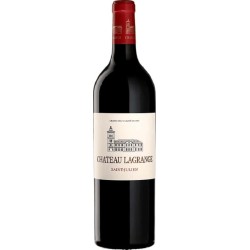
- Saint-Julien Rouge (Grand Vin) — The estate's principal red wine: a Cabernet Sauvignon-dominant blend with Merlot and Petit Verdot, structured and age-worthy, with the characteristic cedar and cassis profile of a classic Saint-Julien.
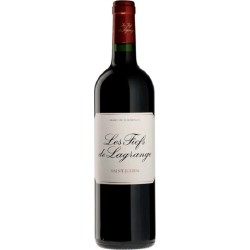
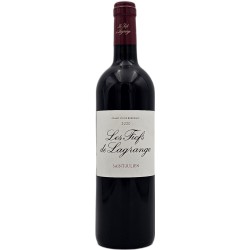
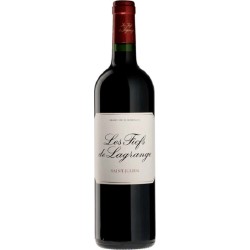
- Les Fiefs de Lagrange Rouge — The second wine, offering earlier accessibility while retaining the house style and the typicity of the appellation.
- Les Arums de Lagrange Blanc — A dry white Bordeaux from Sauvignon Blanc, Sauvignon Gris, and Sémillon, produced in small quantities and offering a refined, aromatic counterpoint to the estate's red wines.
Why we have selected Château Lagrange
At Halles Quercamps, we look for classified growths that genuinely earn their place — estates where the classification reflects what is actually in the bottle. Château Lagrange is precisely that. We have selected it for three reasons: the consistency of its vintages since the early 1990s, the precision of its winemaking — particularly the balance struck between Cabernet Sauvignon's structure and Merlot's suppleness — and the transparency of its terroir, which expresses the gravel ridges of Saint-Julien with admirable clarity. This is a château for the confirmed amateur who wants a cellar-worthy Médoc at a classified level, without resorting to the first growths. It pairs beautifully with roast lamb, aged hard cheeses, and slow-braised beef — and rewards patience in the cellar.
Explore the wines of Château Lagrange
Browse our full selection of Château Lagrange Saint-Julien — reds and whites — and find your preferred vintage in the listings below.