- Coup de coeur
To your home directly - Taxes 'll be calculated automaticaly after validation of your cart
Free of charge, from Tuesday to Saturday 9:00 AM to 12:15 and 14:00 to 19 PM

Nicolas françois, propriétaire passionné des halles de quercamps
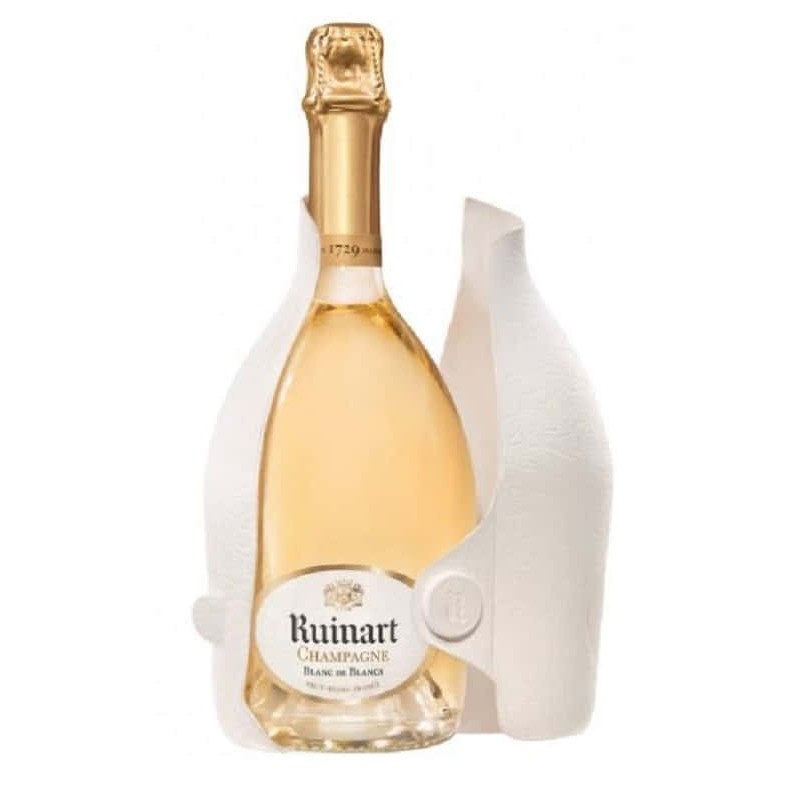
CHAMPAGNE RUINART
Founded on 1 September 1729 in Reims, Champagne Ruinart is the oldest Champagne House in the world. Its Gallo-Roman chalk cellars — the crayères — are listed as a UNESCO World Heritage site, forming a remarkable subterranean setting where the House's wines rest during their élaboration.
The story of Champagne Ruinart begins with Nicolas Ruinart, nephew of the Benedictine monk Dom Thierry Ruinart, who recognised at the very outset of the eighteenth century the commercial potential of the wines then being produced in the Champagne region. The House was formally established on 1 September 1729 — a date that precedes all other Champagne Houses — and has traded continuously ever since. In 1963, Ruinart entered into an association with Moët & Chandon, and in 1987 the House was formally integrated into the LVMH Moët Hennessy Louis Vuitton group, which today oversees its direction whilst preserving the singular identity that has defined Ruinart across three centuries.
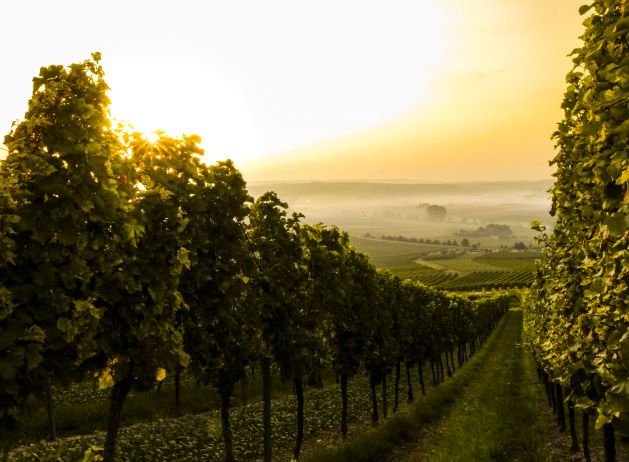
The House works 17 hectares of vines across two of Champagne's most distinguished landscapes: the north-facing slopes of the Montagne de Reims and the Côte des Blancs. The soils are chalk throughout — the same chalk that forms the Gallo-Roman crayères beneath the streets of Reims, galleries that descend up to 38 metres below ground and maintain a constant temperature ideal for the slow maturation of Champagne. Chardonnay is the grape variety that defines Ruinart's house style, contributing the freshness, tension and fine mineral character that run as a thread through the entire range. Pinot Noir and Pinot Meunier complete the palette, providing structure and depth where required. The three varieties are cultivated across the Champagne appellation, with the House drawing on a wider network of growers to complement its own vineyard holdings.
Ruinart holds Haute Valeur Environnementale (HVE) certification, the highest tier of France's national agri-environmental framework. This recognition reflects a sustained commitment to biodiversity, the responsible management of inputs, and the long-term health of the vineyard ecosystem — commitments that sit alongside, rather than in contradiction to, the House's position within one of the world's largest luxury groups.
Ruinart produces blanc and rosé Champagnes across a focused range, with Chardonnay at the centre of each cuvée. The wines are effervescent by definition, crafted in the traditional Champagne method with extended lees ageing in the chalk cellars beneath Reims.
We have listed Champagne Ruinart at Halles Quercamps for three reasons that go beyond the prestige of the name. First, the historical anchor is unmatched: no other Champagne House can claim a founding date of 1729, and the UNESCO-listed crayères beneath Reims are not a marketing device but a genuine and extraordinary piece of living heritage. Second, the stylistic coherence of the range is exemplary — Chardonnay's fingerprint is legible across every cuvée, giving the House a clarity of identity that we find increasingly rare at this level. Third, the HVE certification demonstrates a measurable environmental commitment that matters to us as a merchant and, we believe, to our customers.
We recommend Ruinart to confirmed Champagne enthusiasts who seek a House with genuine depth of history and a defined house style. At table, the blanc cuvées pair beautifully with fine seafood — oysters, scallops, turbot — whilst the rosé holds its own alongside salmon, charcuterie, or a simple roast chicken.
Browse the full selection of Champagne Ruinart wines available to order below, including current releases and any older vintages we hold in stock.


CHAMPAGNE BRUT BLANC DE BLANC
L'appellation "Blanc de Blancs" désigne généralement des vins mousseux ou champagnes élaborés exclusivement à partir de cépages blancs, le plus souvent le Chardonnay. Dans le contexte du Champagne, un "Blanc de Blancs" est produit uniquement à partir de Chardonnay, cépage qui confère au vin finesse, élégance et des notes minérales avec des arômes d'agrumes, de fleurs blanches et parfois de brioche. La texture est souvent délicate avec une acidité tranchante, rendant le Blanc de Blancs idéal pour l'apéritif ou en accompagnement de fruits de mer. La mention "Blanc de Blancs" garantit ainsi un style particulièrement frais et élégant de mousseux ou de champagne.